Color makes people smile.
Stitching makes shapes stay.
When color and stitch live together in one tiny line, clothes wake up.
That is the simple joy of Gral™ Multicolour threads—little strings that change shade as they sew, like a rainbow walking.
What is it, in kid words?
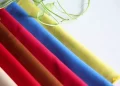
A smooth polyester thread that carries many colors on one cone.
The shades shift along the length—pink to coral, navy to teal, lime to gold.
Every few centimeters, the tone flips.
So one pass of stitching never looks the same as the next.
Each seam tells its own tiny story.
Why designers love this trick.
Multicoloured thread draws art without heavy prints.
Top-stitch on a hoodie shoulder and you get moving stripes.
Flatlock a legging panel and the seam glows, soft then bright, bright then soft.
Embroidery logos turn textured and deep, almost 3-D, even with a simple shape.
Denim pockets suddenly look hand-done.
Kidswear giggles.
Streetwear nods.
Beauty has brains, too.
Because color keeps shifting, small shade mismatches between panels are hidden better.
One cone can work across many fabric colors—saves time hunting for an exact match.
In fast drops, that means fewer emergency dye lots and fewer late nights.
Where to use it (lots of places):
- Athleisure: coverstitch hems, curved princess seams, back yokes.
- Denim: bar-tacks, coin-pocket arcs, waistband top-stitch.
- Knits & tees: shoulder join, cuff detail, neck tape reveal.
- Footwear uppers: zig-zag eye-stay stitches, heel loops, decorative darts.
- Kids & festival pieces: playful embroidered icons, stars, initials.
- Outdoor gear: backpack,s bartacks, cap panels, tent accents that pop in photos.
Design ideas that land:
Try a tone-on-tone duet—choose a multicoloured cone that dances around your fabric’s base shade, so the effect is elegant, not loud.
Or go high-contrast for sport energy—neon thread across deep navy or charcoal.
Stitch long runs where the color change can show (center-front zips, side seams).
Break lines into dashes to make the shade flips more obvious.
Round corners; color turns look sweeter on curves than on sharp angles.
Sewing room tips (simple card by the machine):
- Size of the Needle – 80–100, knits: ball-point and wovens: micro-point.
- Begin with simple polyester tension, which can then be relaxed slightly if the seam appears tight.
- Stitch length – Top-stitch: 3 to 3.5 mm; embroidery fills: 2.5–3.0 mm.
- Use clear or matching bobbin thread when you want the multicolour only on top.
- Slow slightly on visible arcs so the color steps don’t “jump.”
- Clean needle often; tidy thread shows best on tidy holes.
Want the effect to sing?
Place the seam on moving parts.
Hips sway, cuffs swing, heels lift.
Motion turns shade changes into little fireworks.
Photos love that, and shoppers see the twinkle from across the aisle.
Comfort stays, promise.
Gral™ Multicolour is smooth filament polyester, so seams lie flat and soft.
No gritty feel, no crunchy ridge on a yoga pose.
Abrasion is strong; bartacks hold up on bags and shoes.
Wash after wash, the color keeps smiling.
Sustainability gets a turn, too.
Thread-led color can replace some screen prints or heat transfers, which means fewer inks and films.
If your garment body is polyester, choose a recycled-content variant and keep a mono-material story—fabric, recycled polyester thread or polyester corespun thread, and tapes from the same family for easier end-of-life sorting.
Tiny part, real help.
Inventory and planning wins:
One cone spans several colorways, so your trim wall shrinks.
That saves space and reduces leftovers.
When line plans change late (they always do), multicolour buys you slack without missing the vibe.
It’s like carrying a pocket crayon set instead of a suitcase.
How to show it online:
Shoot under soft daylight and also under warm store light.
Pan slowly across the seam so viewers can watch the color walk.
Close-up for texture, wide shot for placement.
Add a tiny caption: “Stitched in shifting shades—each piece is a little unique.”
Keep it honest and short.
Care tag words, easy:
Wash cold, gentle spin.
Close zips.
No bleach.
Tumble low or air dry.
That keeps the shine crisp and the filament happy.
Tiny pilot plan (one week, one team):
- Pick one hoodie and one pair of leggings.
- Choose two multicoloured cones: a calm blend and a bold blend.
- Stitch three placements on each style—hem, major seam, small logo.
- Build 40 sets; hand to testers for three wears and two washes.
- Ask: Look good? Feel good? Any snags?
- Keep the winning placement, then scale for the drop.
Common oops & quick fixes:

- Seam looks busy: switch to tone-on-tone multicolour or reduce stitch density.
- Color steps hide on micro seams: lengthen the stitch or pick a faster-changing cone.
- Pucker on light knits: lower tension, raise differential feed slightly, or add a whisper-thin stay tape.
- Logo edges fuzzy: slow 10% and check needle tip; crisp edge returns.
Little brand story, big heart:
Multicolour says craft without shouting.
It feels playful on kidswear, premium on denim, electric on sport.
And because the pattern never repeats exactly, each buyer gets a piece that feels a tiny bit personal.
Wrap like a bow.
Fabric brings the canvas.
Gral™ Multicolour brings the brush.
With one cone and a curious hand, you paint seams that move, logos that glow, and products that look “one-of-one” in a world of same-same.
Stitch light.
Stitch bright.
Let the color walk, and let your story walk with it.